Revolutionizing the Insurance Appeal Process




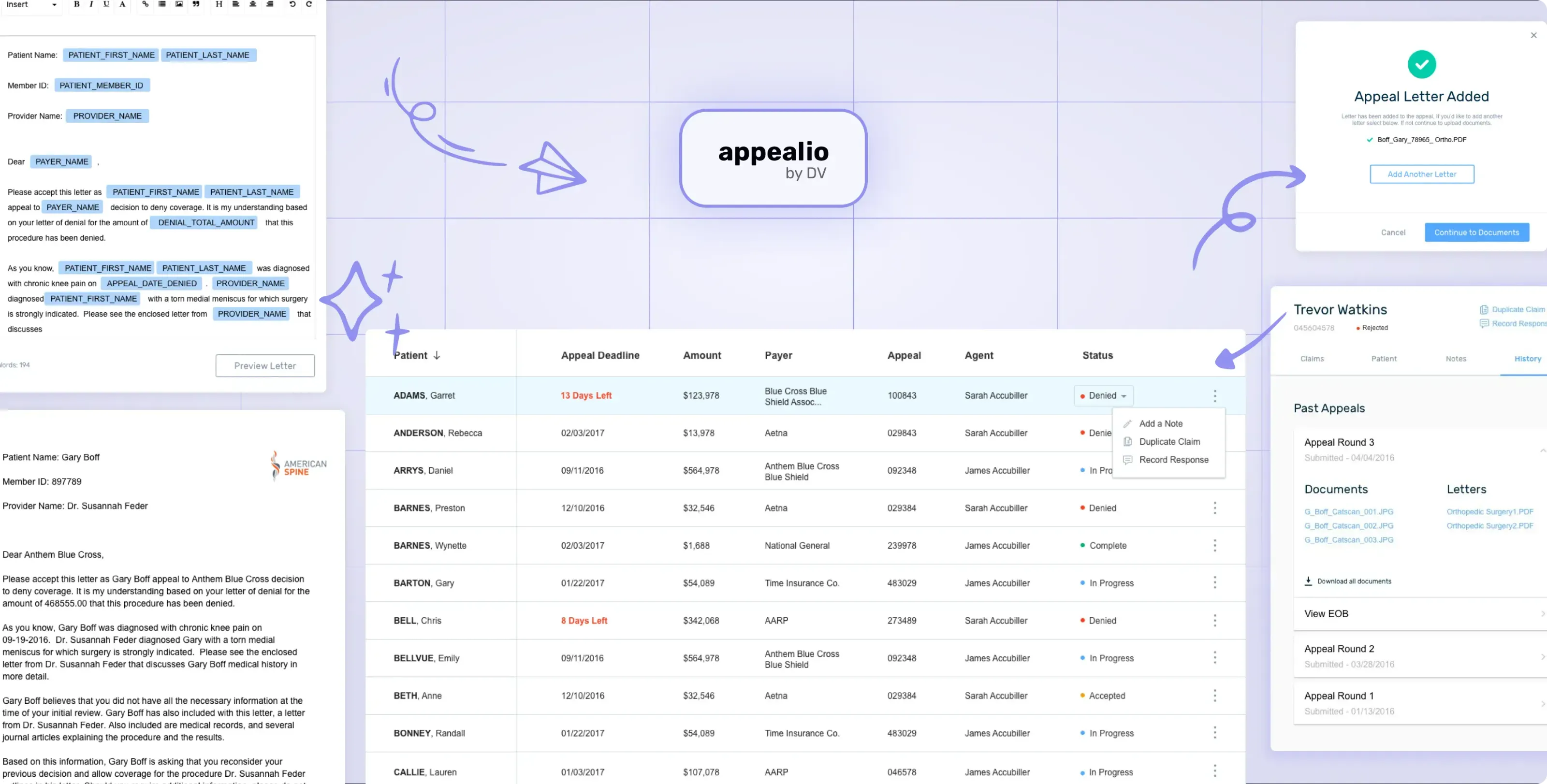
How we designed an intuitive, AI-assisted platform with DocVocate to simplify insurance appeals for healthcare providers—cutting prep time, improving prioritization, and lifting revenue.
Good or bad, we all have to deal with insurance.
However, unless you work in healthcare, you've probably never encountered the appeals process. This process involves negotiations between insurers and healthcare providers to determine final prices.
Project Overview
Key Facts
- Challenge: Private insurers deny nearly 15% of first-time claims
- Impact: Stalled cash flow and costly appeals process for providers
- Solution: AI-powered platform to streamline appeals workflow
- Result: 75% reduction in appeal preparation time
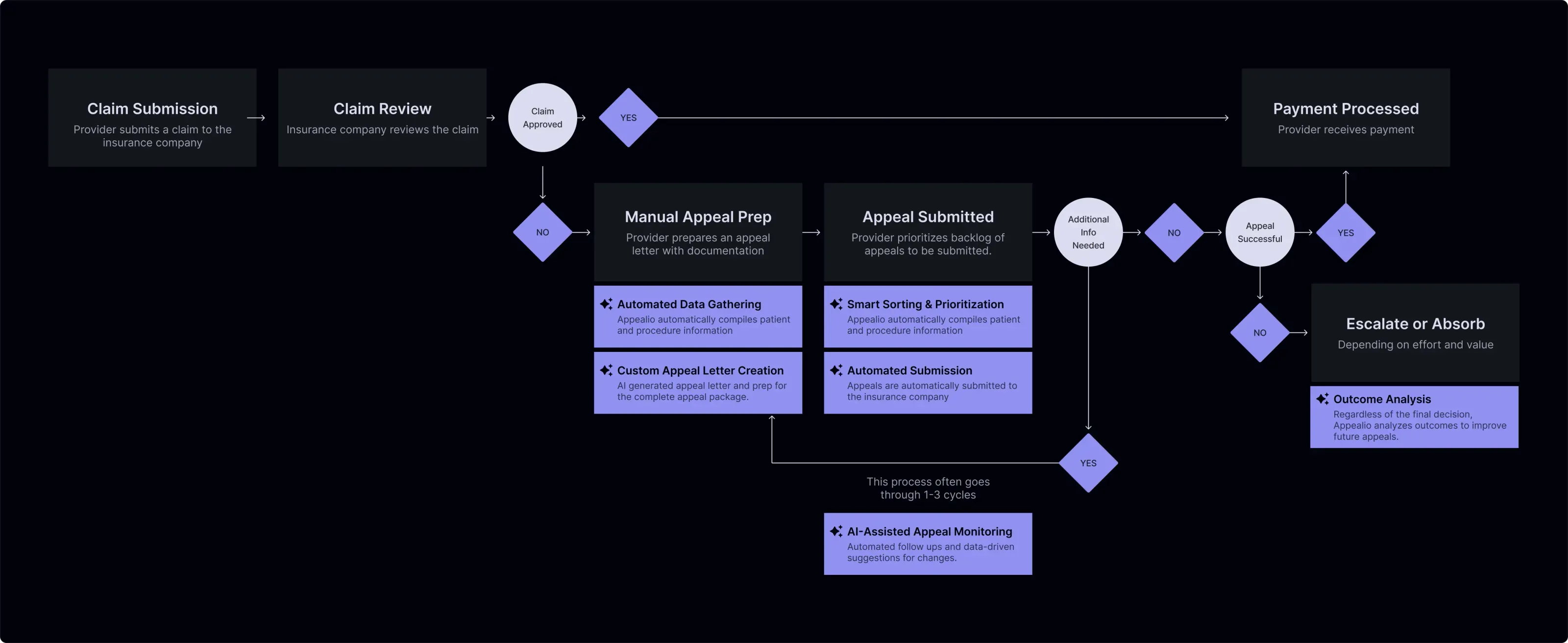
When DocVocate hired my team at Kunai, all they had was an idea and an AI model. Private insurers deny nearly 15 % of first-time claims—stalling cash flow and forcing providers into costly appeals. We set out to build an end-to-end product that would use AI to slash appeal prep time and push those dollars back into clinicians' hands.
Customer Research
To get started, I needed to learn as much as I could about insurance claims and appeals, and just how problematic the process was.
I spoke with 25 medical providers, from small acupuncture clinics to large hospitals, observing how they managed their piles of rejected claims. They processed each appeal one by one, starting with the oldest. For each appeal, they retrieved medical files, pulled notes, scanned any tests or x-rays, and then typed a letter explaining why the insurance should cover the suggested amount. Each appeal took between 20-40 minutes.
Key Findings
From this research, I identified three key areas that our tool needed to address:
- Automating repetitive tasks - Reducing the 20-40 minutes spent on manual documentation
- Improving prioritization - Moving beyond chronological processing to value-based sorting
- Creating a digital repository - Centralizing medical files for faster access and reuse
Building the Product
Key Components
Appeal Letter Generator
AI-powered document creation that pulls from medical records and policy language
Smart Prioritization
Value-based claim sorting that maximizes revenue recovery
Document Repository
Centralized storage for medical records and appeal documentation
Workflow Management
End-to-end tracking from claim denial to appeal resolution
The Appeal Letter
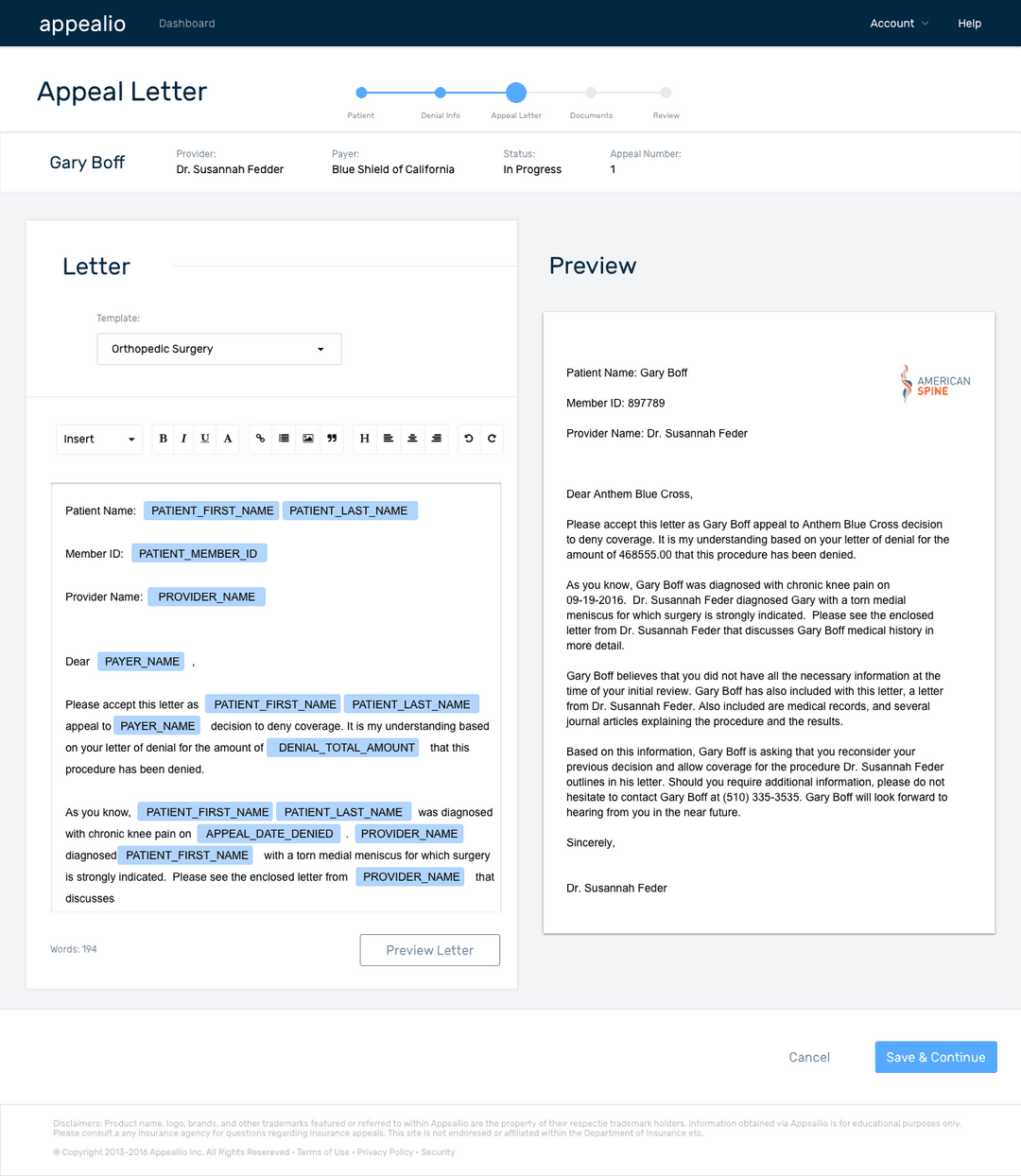
Drafting the appeal letter is the priciest choke-point —each denied claim adds $25–$118 in extra manual rework before it even gets back to the payer. So we trained the AI to pull patient data, cite policy language, and generate a first-draft letter in seconds.
We designed a split-screen layout for ease of use: on the right, a text editor with the letter and data ready to edit, and on the left, a preview of the final letter.
Prioritization
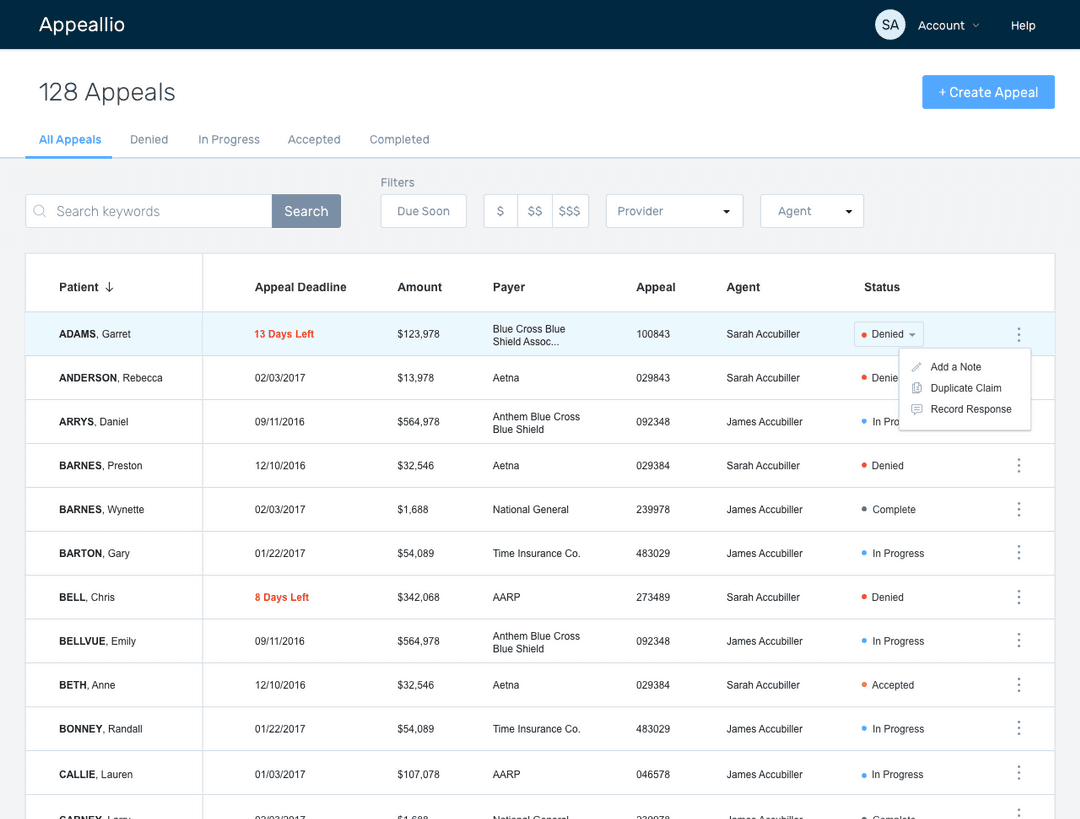
Working on appeals from oldest to newest led to missed deadlines and lost revenue. So, we created a better way to prioritize appeals. We developed an algorithm based on deadline, monetary value, appeal round, and chance of success to determine the most high-impact appeals.
Up to 60 % of denied claims are never resubmitted—so choosing the right appeals first isn’t busywork; it’s rescued revenue. Our algorithm weighs deadline, dollar value, appeal round, and win-probability to surface the highest-impact cases at the top of the queue.
This helped medical providers generate more money from these appeals with a much higher success rate.
HIPAA and Document Storage
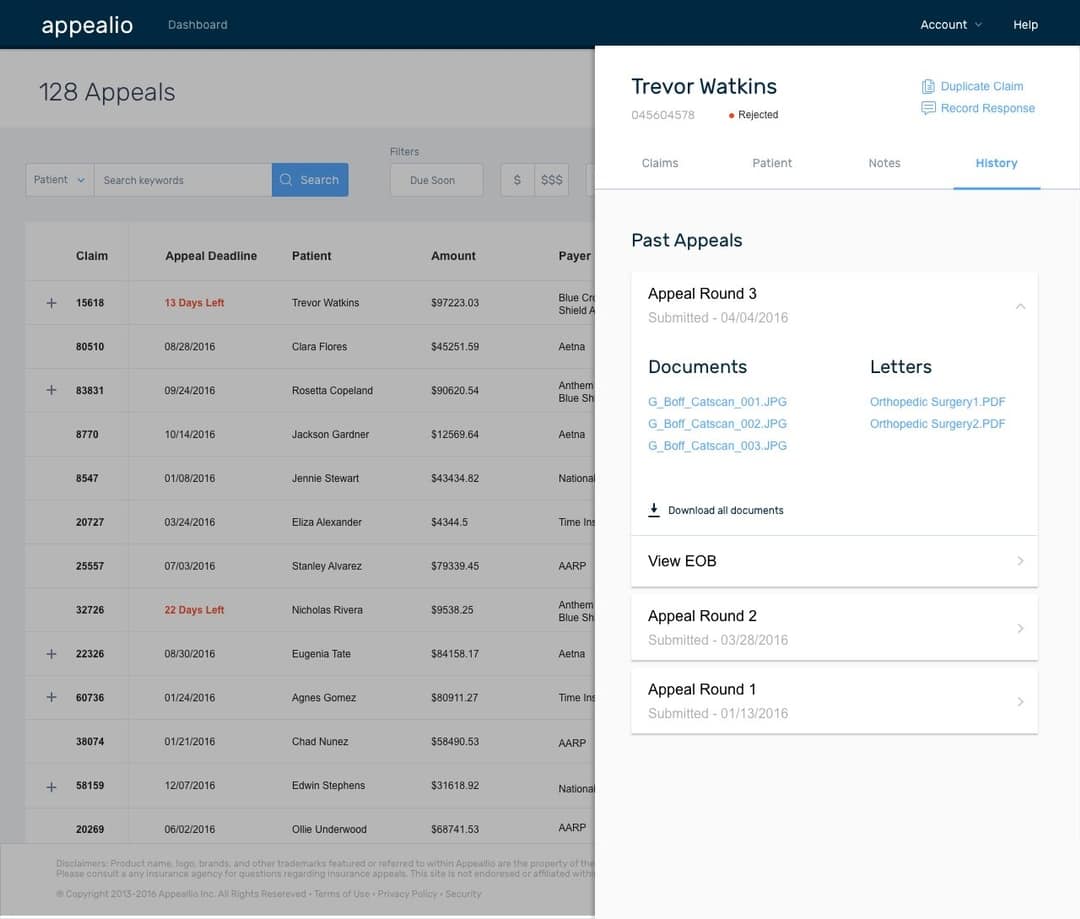
Storing medical data is tricky. To make the appeal process easy, we needed a system that allowed healthcare providers to upload records, test results, and images within our tool. It had to be secure and private. We followed all e-PHI (electronic Private Health Information) and HIPAA rules in the application and added encryption and other protections for the data.
Outcomes
We introduced the beta to hospitals and small healthcare providers—and the feedback exceeded what we expected. Teams moved appeals faster with less stress: fewer rounds, higher payer acceptance, and more dollars staying with patient care.
Decrease in appeal time, saving providers more than an hour every day. Case Study →
Increase in revenue through prioritized appeals.
Higher volume of appeals completed through automation and prediction.
More appeals accepted by insurance with AI-driven accuracy.